Moving a Local Dental Practice Into Google's Map Pack.
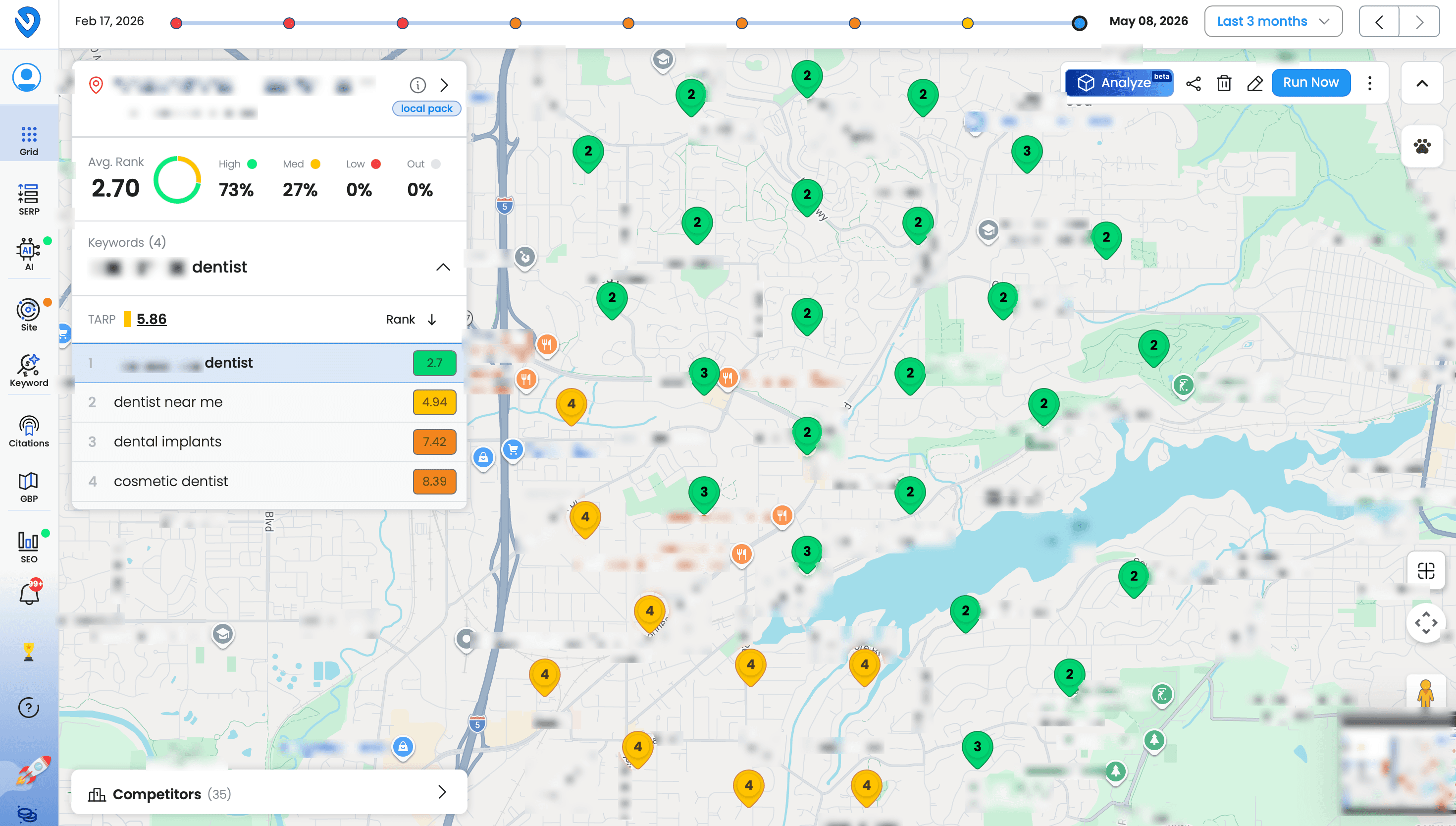
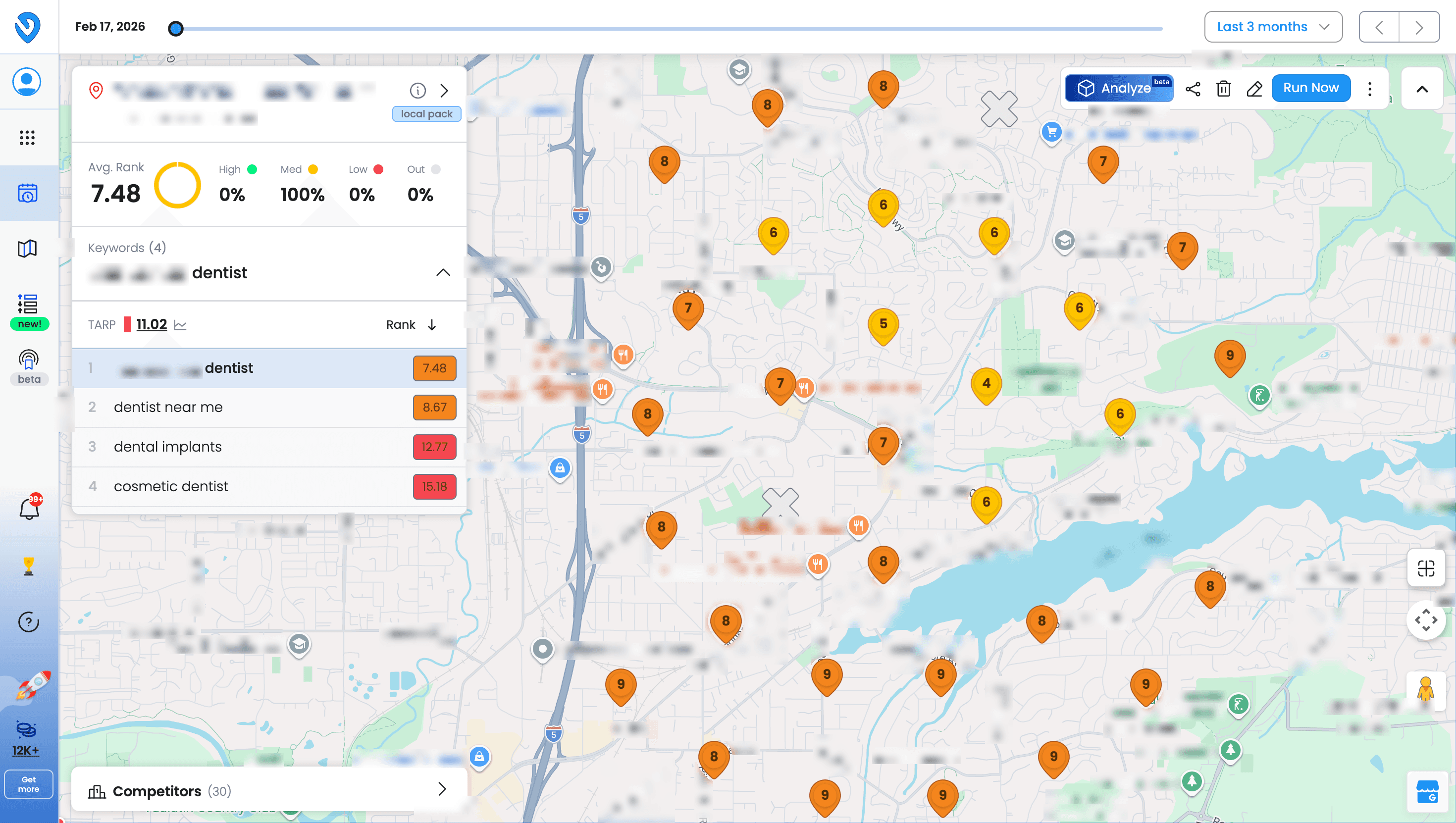
Between February and May 2026, a dental practice I managed improved its average Google Maps ranking for a primary local search term from 7.48 to 2.70. Over the same period, its visibility in the top three local results expanded from 0% to 73% of the measured geographic grid, strengthening its presence where nearby patients were searching for dental care.
Results explorer
Keyword: “[city] dentist”
Feb 17 → May 8, 2026
- Feb 2026
- 7.48
- May 2026
- 2.70
Average across a geographic grid of points around the practice · Source: geo-grid rank scans
Keyword: “dentist near me”
Feb 17 → May 8, 2026
- Feb 2026
- 8.67
- May 2026
- 4.94
Average across a geographic grid of points around the practice · Source: geo-grid rank scans
Keyword: “dental implants”
Feb 17 → May 8, 2026
- Feb 2026
- 12.77
- May 2026
- 7.42
Average across a geographic grid of points around the practice · Source: geo-grid rank scans
Keyword: “cosmetic dentist”
Feb 17 → May 8, 2026
- Feb 2026
- 15.18
- May 2026
- 8.39
Average across a geographic grid of points around the practice · Source: geo-grid rank scans
Context
The Context & Objective
A dental practice I managed had an established presence on Google Maps but struggled to appear among the top local search results for its primary keyword. Despite being listed, the practice ranked outside the top three across every point in the measured geographic grid, limiting its visibility to potential patients searching for dental care nearby.
The objective was to establish consistent Top 3 visibility within a realistic geographic area surrounding the practice before working to expand that coverage further. This required a broader local SEO strategy that considered both the Google Business Profile and the practice's overall local search presence, with geographic heatmaps used to measure progress across the surrounding market.
Strategy
My Strategy
Improving local search visibility required more than optimizing a Google Business Profile. I approached the account through a combination of website relevance, business profile optimization, reputation management, and ongoing geographic performance tracking, supported by citation-building efforts across the broader team.
Google Business Profile Optimization
Refined business categories, services, descriptions, and visual content to strengthen the practice's relevance and presentation in local search.
Website & Technical SEO
Improved service page content, title tags, internal linking, and local relevance while implementing structured data to reinforce the practice's services and business information.
Reputation & Local Citations
Supported review management and reputation-building efforts, alongside citation development and business listing consistency handled collaboratively with the SEO team.
Geographic Performance Tracking
Used recurring local ranking heatmaps to monitor average position and Top 3 coverage across the surrounding area, helping identify where visibility was improving and where further optimization was needed.
Results
Results by Keyword
Between February 17 and May 8, 2026, the practice saw substantial improvements in local search visibility for its primary target keyword. Average map ranking improved from 7.48 to 2.70, while Top 3 coverage expanded from 0% to 73% of the measured geographic grid.
| Keyword | February 17, 2026 | May 8, 2026 |
|---|---|---|
| [city] dentist | 7.48 | 2.70 |
| dentist near me | 8.67 | 4.94 |
| dental implants | 12.77 | 7.42 |
| cosmetic dentist | 15.18 | 8.39 |
Primary keyword performance
7.48 → 2.70
Average map rank (improvement of 4.78 positions)
0% → 73%
Top 3 grid coverage (+73 percentage points)
These results indicate that the practice was appearing in prominent local search positions across a much larger portion of its surrounding market, improving its opportunity to be discovered by nearby patients.
A second business
Expanding Local Visibility Beyond the Initial Area
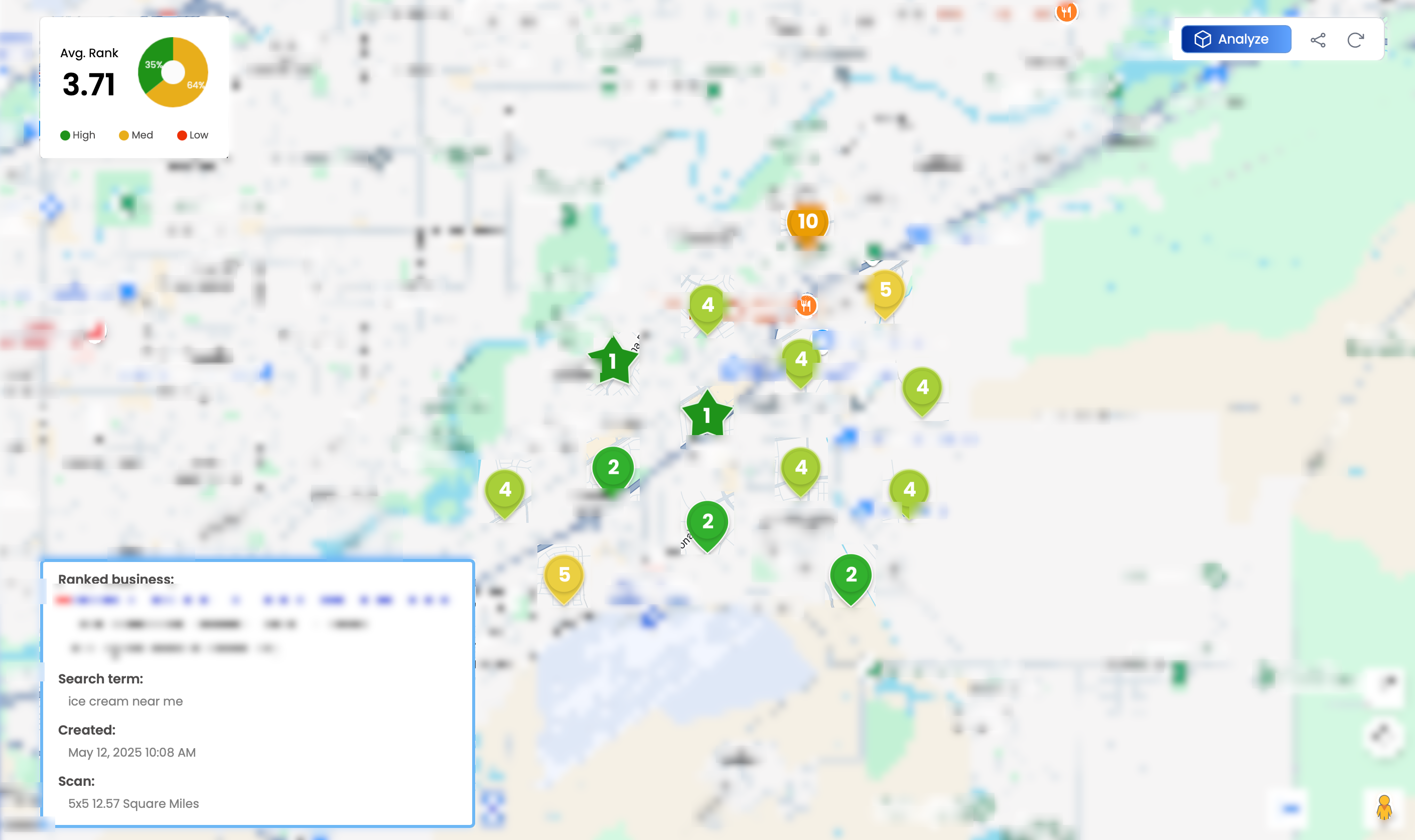
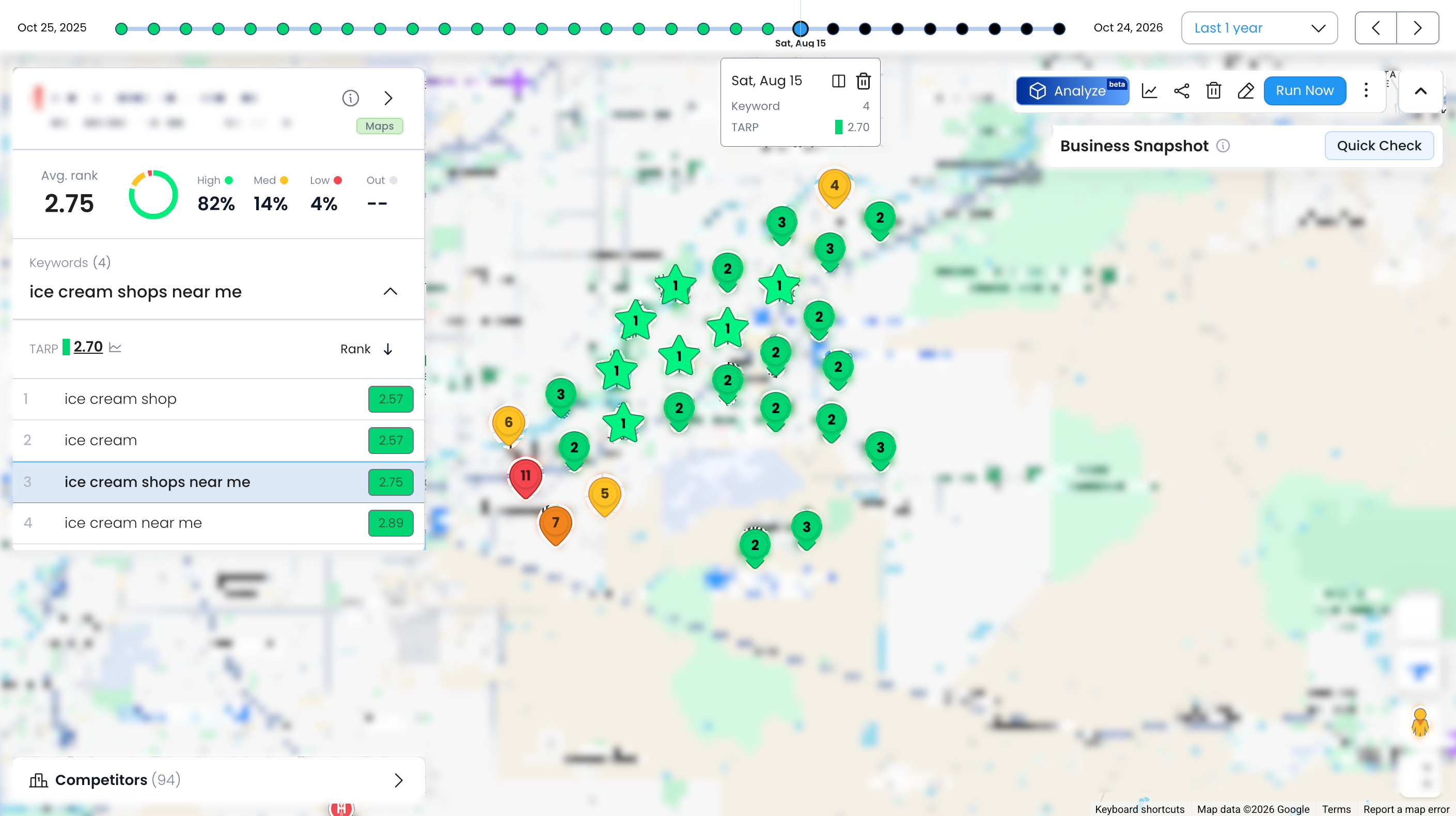
In a separate local SEO engagement, I worked to strengthen an ice cream shop's Google Maps visibility beyond its immediate surroundings. As the campaign progressed, geographic heatmap tracking helped evaluate how consistently the business appeared in prominent search positions across a broader area.
Between May 2025 and August 2026, the business maintained a strong average ranking while the measured geographic coverage expanded. The later scan showed an average position of 2.75, with 82% of grid points ranking in the Top 3 for a relevant local search term.
This example reinforces the importance of building a strong local foundation before evaluating opportunities to expand visibility into surrounding areas.
AI search
Beyond Google Maps: Optimizing for AI Search
As search continues to evolve, local visibility is no longer limited to traditional organic rankings and Google Maps. Businesses also have opportunities to appear in AI-generated answers when potential customers ask questions, compare services, or look for local recommendations.
Building on traditional local SEO practices, I've expanded my approach to include Answer Engine Optimization (AEO) and Generative Engine Optimization (GEO). This involves reviewing crawler accessibility, structuring content around relevant search questions, implementing FAQ and other appropriate structured data, and improving page copy so information is easier for search engines and AI systems to interpret and retrieve.
The goal is to help businesses become a relevant, trustworthy answer wherever potential customers are searching, while recognizing that AI visibility requires ongoing testing, monitoring, and refinement.
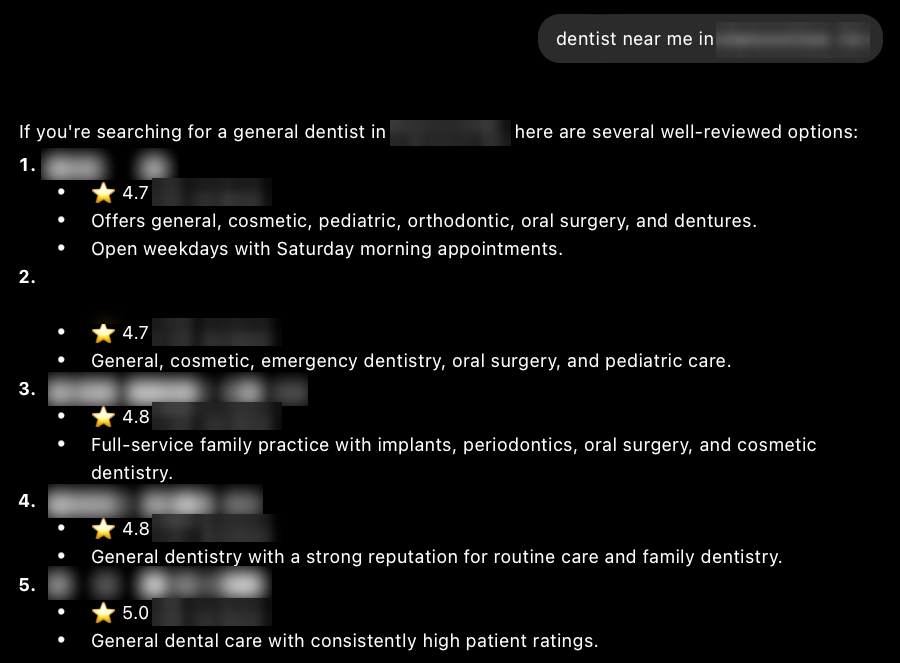
In a separate client example, a Southern California dental practice I managed was the first of five practices ChatGPT recommended in one response to a “dentist near me” query in its city. AI answers vary by query, user, and time, so this shows presence, not a guaranteed ranking.
Lessons
What I Learned
A Strong Local Presence Works as One Connected System.
Effective local SEO comes from aligning the Google Business Profile, website content, technical structure, citations, and reputation signals. When these elements consistently reinforce the same business information, services, and local relevance, they create a stronger foundation for visibility across local search.
Build Local Strength Before Expanding Reach.
Establishing consistent Top 3 visibility within a realistic geographic area creates a stronger foundation for expanding into surrounding markets. Geographic heatmaps help measure that progress and identify where further optimization is needed.
Search Is Evolving. So Should the Strategy.
Traditional SEO remains foundational, but AI-generated answers introduce new considerations for how businesses structure and communicate information. Adapting content for discoverability, clarity, and relevance is becoming an important part of a broader search strategy.
Ranking changes reflect observed results during the periods shown, not controlled experiments. Geographic heatmap metrics depend on the keywords, grid locations, and scan settings used. AI-generated recommendations can vary by query, user, and time. Client identities are withheld.