More Conversions. Lower Costs. Smarter Google Ads Decisions.
Improving Google Ads performance isn't always about increasing budgets. It's about understanding where the money is going, identifying which campaigns are generating valuable opportunities, and making informed decisions about what to improve.
While managing paid search accounts at Digital Canvas Marketing, I worked across campaign strategy, budget allocation, search intent, bidding, and conversion measurement. This case study examines performance improvements across three healthcare accounts under my management and the approach I used to evaluate and optimize their campaigns.
Results explorer
Dental Client · Alexandria, VA
Feb → Mar 2026
- Feb 2026
- 35
- Mar 2026
- 59
- Feb 2026
- $29.59
- Mar 2026
- $18.27
Ad spend +4% ($1,035 → $1,078) · Source: Google Ads account data
Dental Client · Lakeway, TX
Jan → Feb 2026
- Jan 2026
- 19
- Feb 2026
- 25
- Jan 2026
- $58.06
- Feb 2026
- $40.00
Ad spend about 9% lower · Source: Google Ads account data
Dental Client · Queens, NY
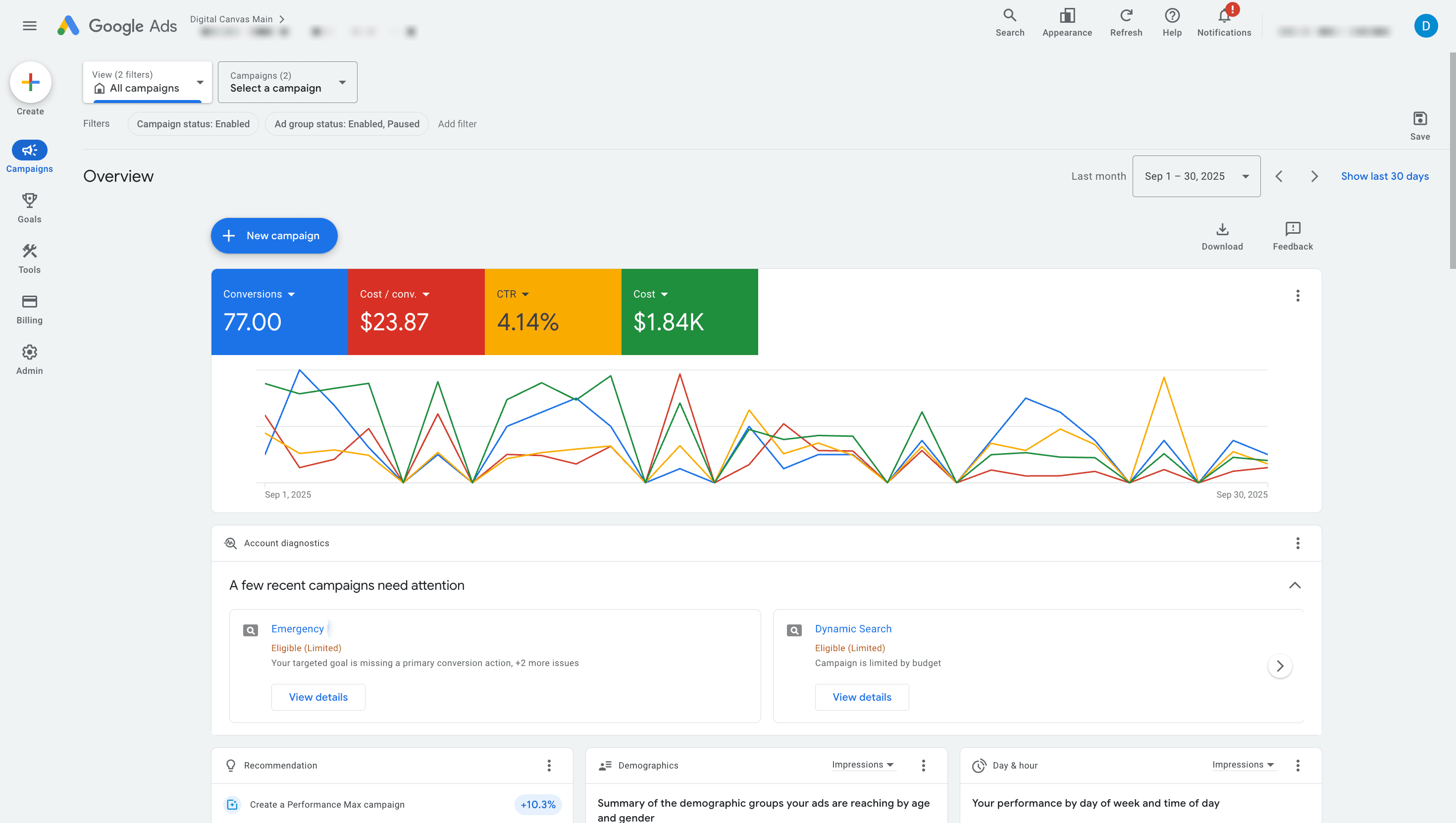
Sep → Oct 2025
- Sep 2025
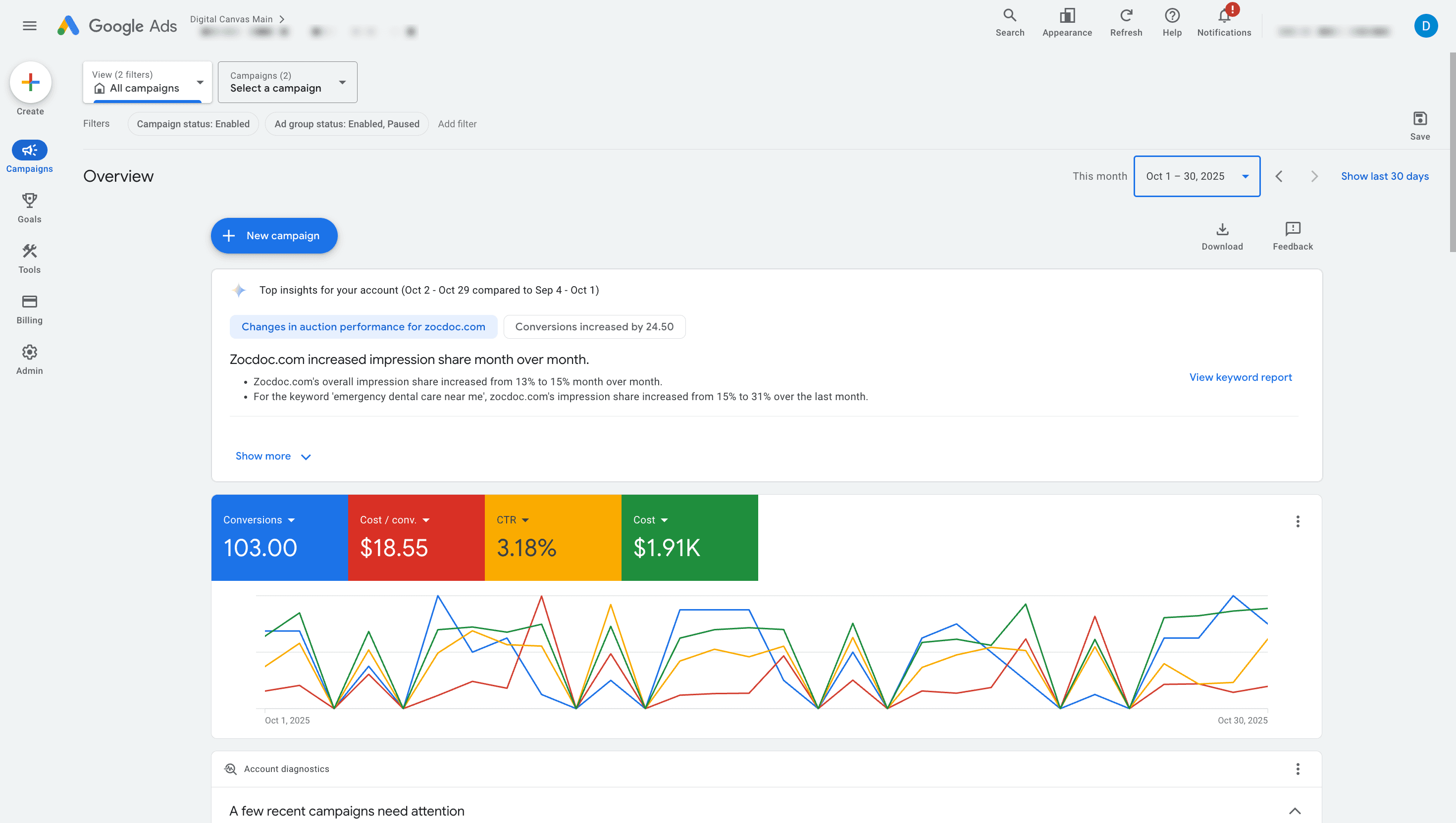
- 77
- Oct 2025
- 103
- Sep 2025
- $23.87
- Oct 2025
- $18.55
Ad spend about 4% higher ($1.84K → $1.91K) · Source: Google Ads account data
Context
The Context
Managing multiple Google Ads accounts meant balancing performance goals, monthly advertising budgets, and changing search demand across different businesses. Each account had its own campaign structure, conversion trends, spending patterns, and opportunities for improvement.
My responsibility was to evaluate account performance, monitor budget pacing to keep spending aligned with monthly targets, identify where campaigns were underperforming or spending inefficiently, and make informed optimization decisions while maintaining consistent oversight of the accounts.
The Objective
Increase the number of conversions while reducing the cost of acquiring them, without relying on a proportional increase in advertising spend. The goal was to make better use of existing budgets and improve the efficiency of each account.
Approach
My Approach
Select a step to see what it involved.
Evaluate Account Performance
Reviewed campaign and ad group performance to understand conversion trends, cost per conversion, search demand, and where advertising spend was producing the strongest results. Used these insights to identify what was and wasn't working, where market demand aligned with client priorities, and which opportunities were worth building on.
Monitor Budget Pacing & Allocation
Tracked spending against monthly budgets and projected end-of-month totals to identify accounts pacing ahead or behind target. Evaluated campaign performance before adjusting daily budgets, helping keep spending aligned with targets while prioritizing stronger opportunities.
Refine Targeting & Search Intent
Analyzed keywords, search terms, geographic targeting, and campaign structure to identify where traffic aligned with the services being advertised. Refined targeting and keyword coverage to focus spending on searches with stronger potential to convert.
Adjust Bidding & Campaign Settings
Evaluated bidding strategies, target CPAs, campaign schedules, and performance trends before making adjustments. Tested ad variations against existing messaging and reviewed the results alongside landing page performance and targeting to identify opportunities for improvement.
Validate Measurement & Monitor Results
Reviewed conversion tracking through Google Ads, Google Tag Manager, and analytics tools to identify potential measurement issues. Monitored performance after changes to evaluate results, investigate unexpected shifts, and guide further optimization.
Results
Results & Evidence
Account A — Dental Client · Alexandria, VA
More Conversions With a Lower Cost per Conversion
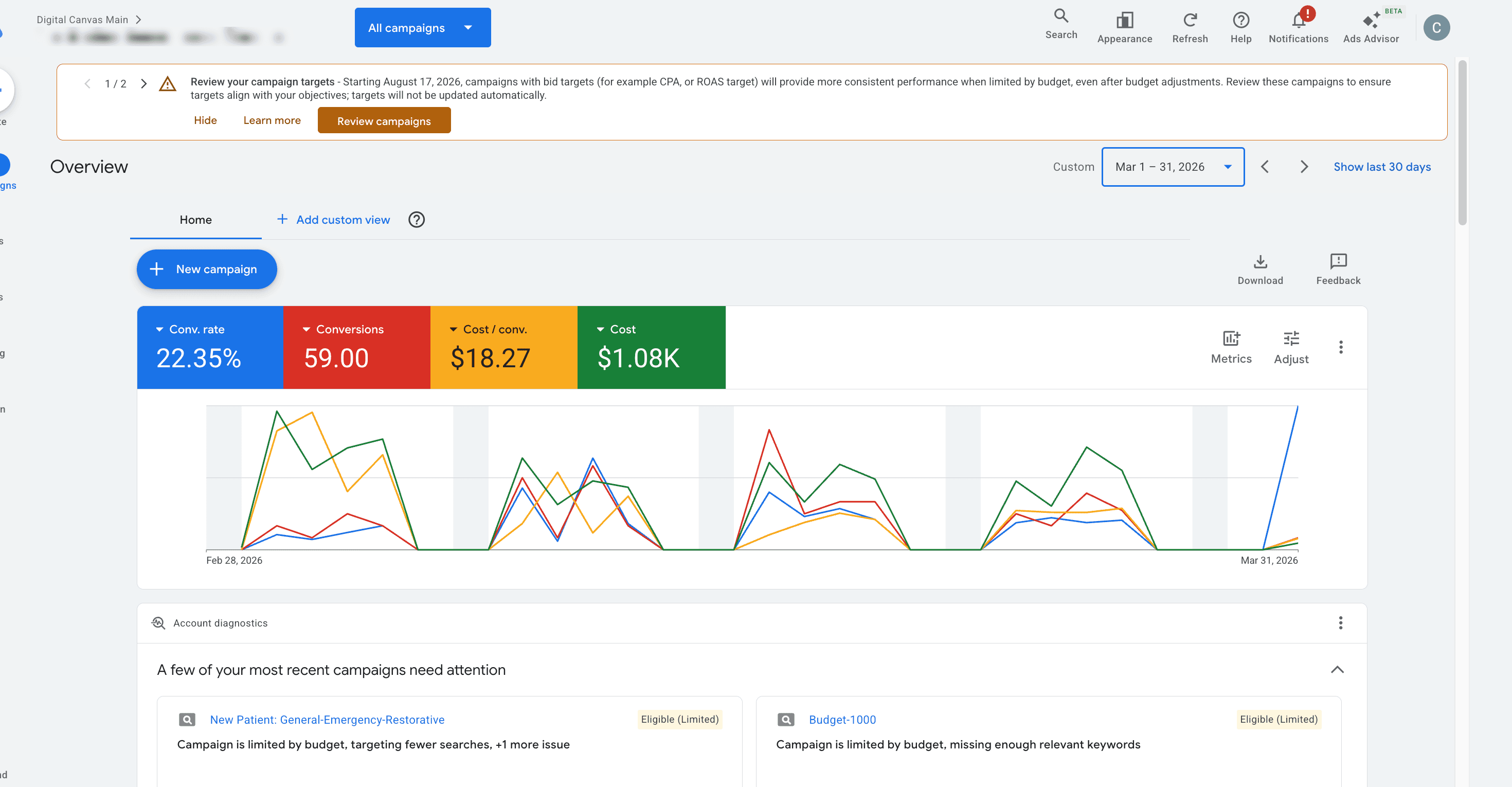
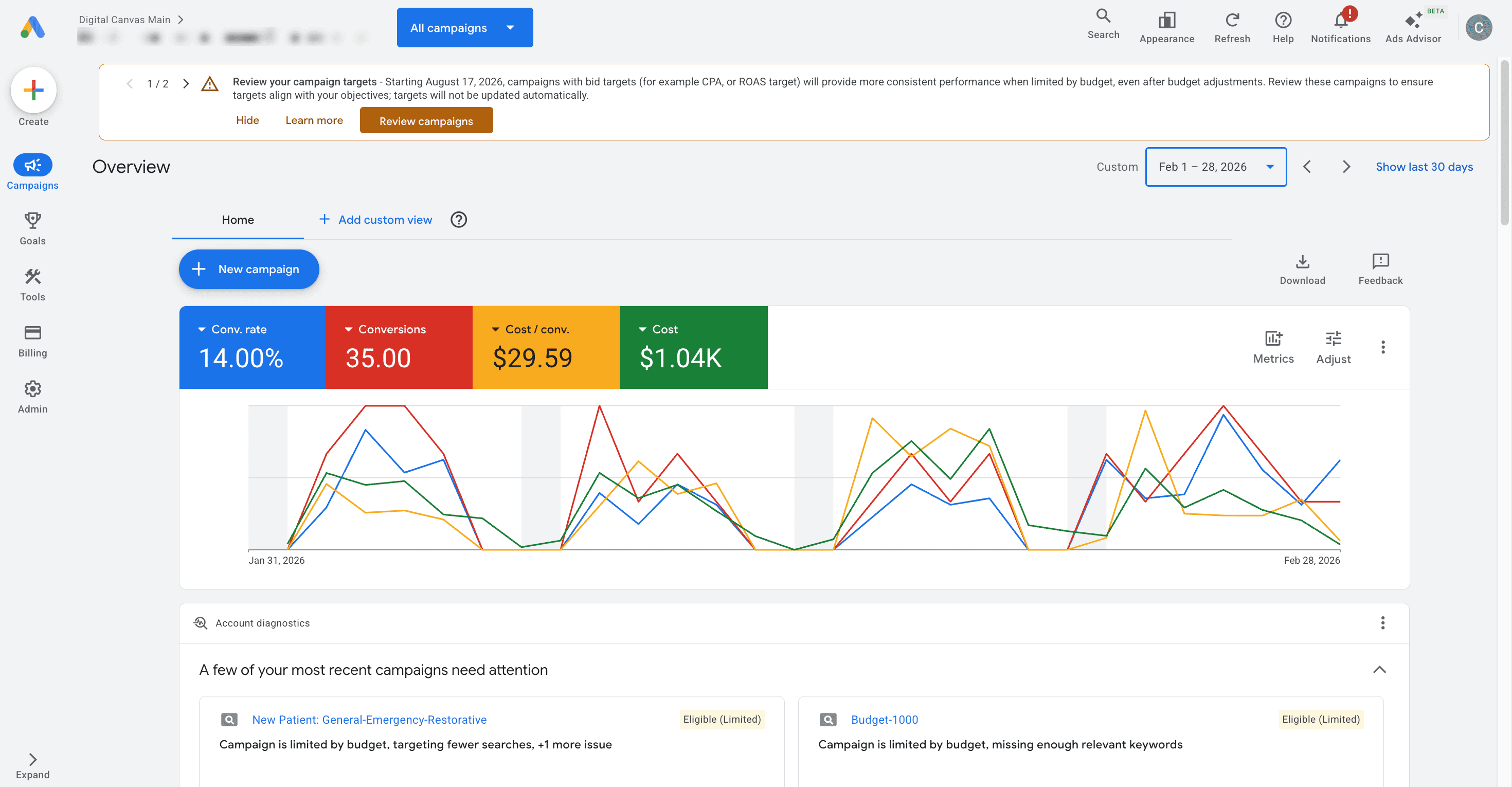
The account recorded a 69% increase in conversions and a 38% reduction in cost per conversion, with only a modest increase in advertising spend. Conversion rate also improved by 8.4 percentage points, reflecting greater efficiency in turning incoming traffic into opportunities to acquire new patients.
| Metric | Feb 2026 | Mar 2026 | Change |
|---|---|---|---|
| Conversions | 35 | 59 | +69% |
| Cost per conversion | $29.59 | $18.27 | −38% |
| Conversion rate | 14.0% | 22.4% | +8.4 pts |
| Spend | $1,035 | $1,078 | +4% |
Cost per conversion held near $22 through May and June 2026.
Account B — Dental Client · Lakeway, TX
More Patient Opportunities at a Lower Acquisition Cost
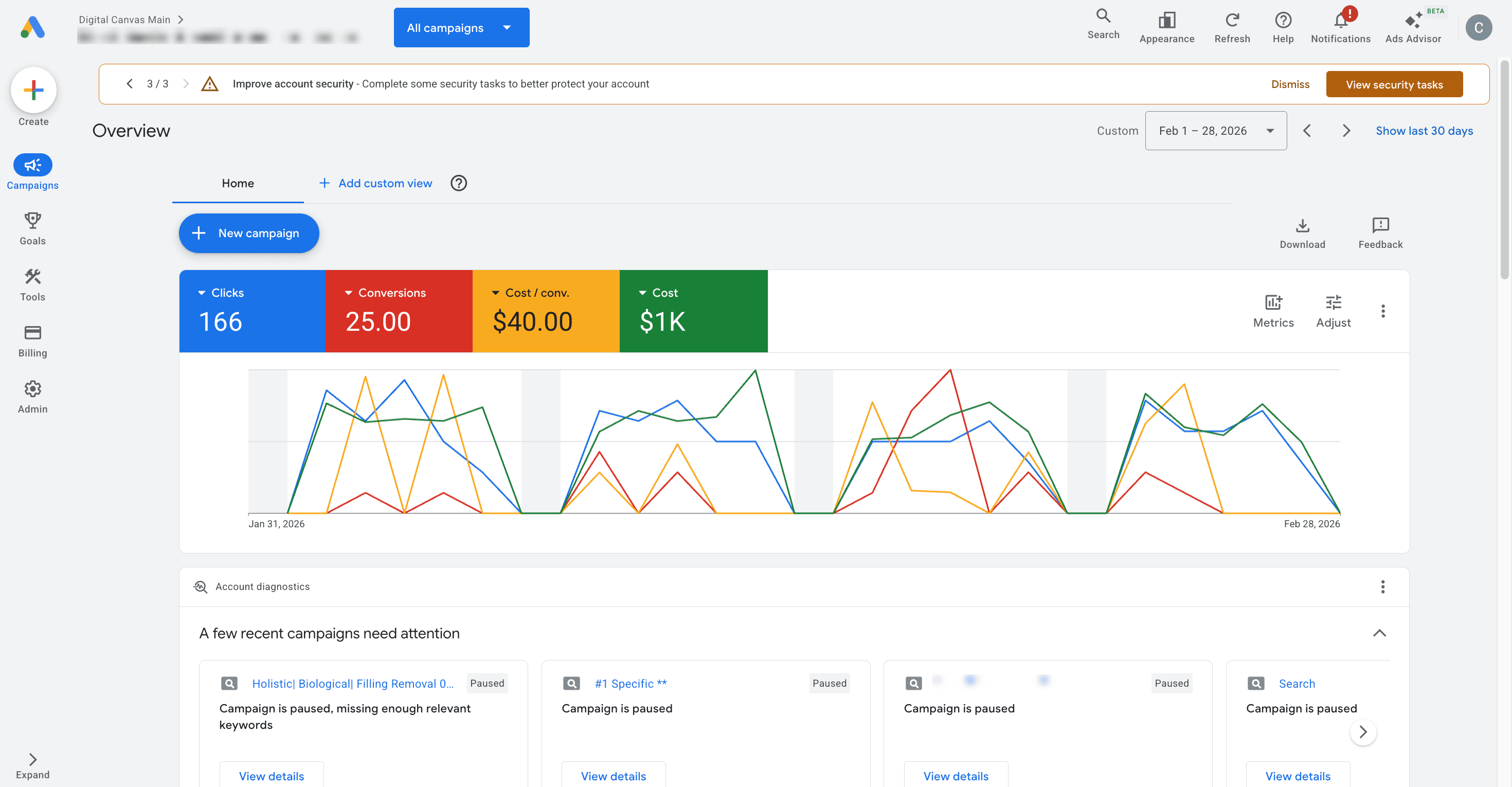
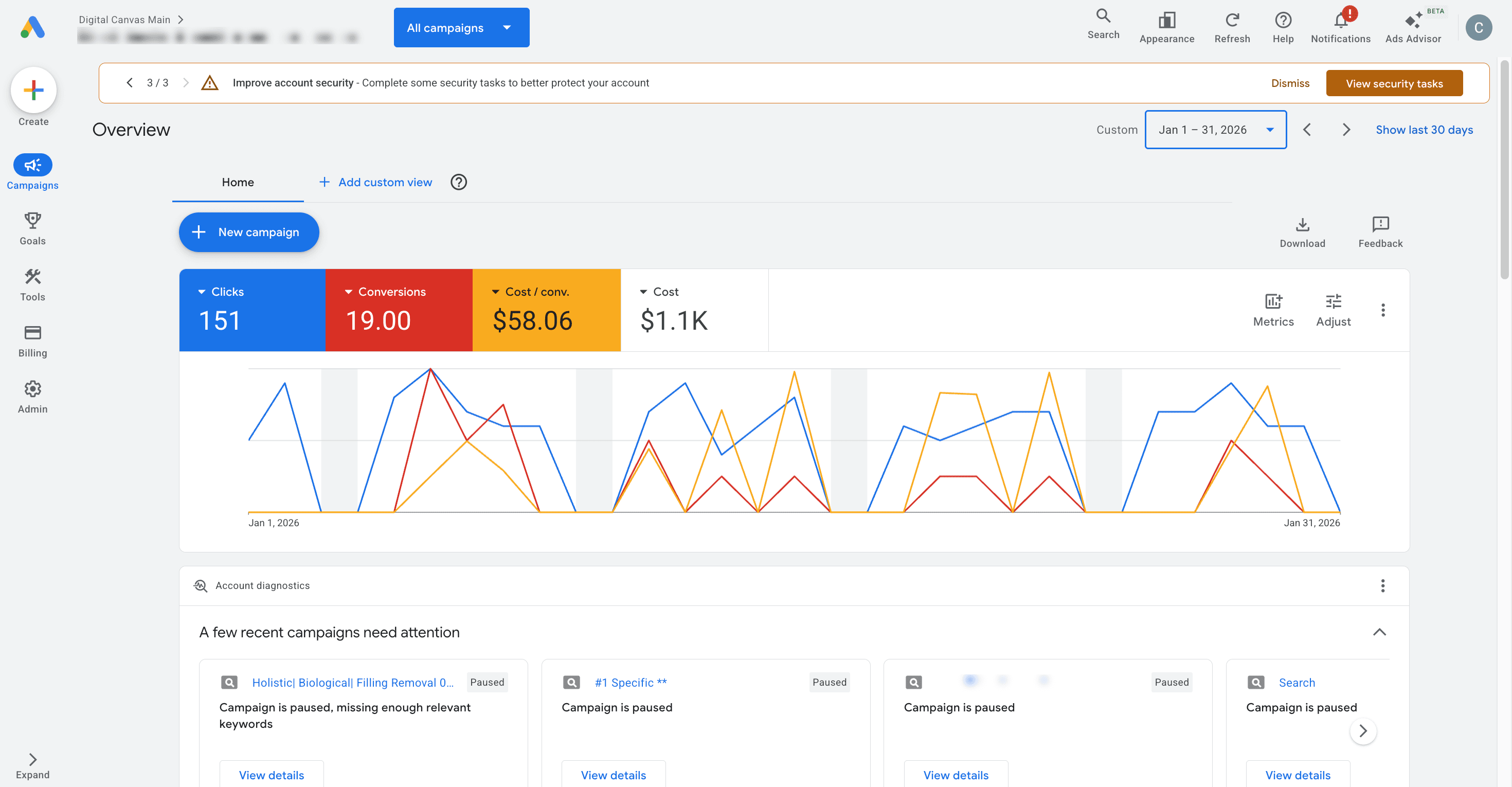
The account recorded a 32% increase in conversions while reducing cost per conversion by 31%. This created more opportunities to acquire new patients while improving the efficiency of the advertising investment.
| Metric | Jan 2026 | Feb 2026 | Change |
|---|---|---|---|
| Conversions | 19 | 25 | +32% |
| Cost per conversion | $58.06 | $40.00 | −31% |
| Advertising spend | ≈ $1.1K | ≈ $1.0K | ≈ 9% lower |
Account C — Dental Client · Queens, NY
Increasing Conversion Volume While Improving Cost Efficiency
The account recorded a 34% increase in conversions alongside a 22% reduction in cost per conversion. These improvements represented more opportunities to attract new patients while lowering the average advertising cost of each recorded conversion.
| Metric | Sep 2025 | Oct 2025 | Change |
|---|---|---|---|
| Conversions | 77 | 103 | +34% |
| Cost per conversion | $23.87 | $18.55 | −22% |
| Advertising spend | ≈ $1.84K | ≈ $1.91K | ≈ 4% higher |
Lessons
What I Learned
Consistent Principles. Different Markets.
The same optimization principles apply across markets, but population, competition, search demand, and seasonality influence how performance should be evaluated.
Test, Learn, and Refine.
Comparing ad variations and evaluating the conversion funnel helped identify what was working, what wasn't, and where to focus improvements.
Conversions Create Opportunities.
More conversions at a lower cost create more opportunities to acquire new patients, but their business value also depends on lead quality and how effectively a practice handles incoming inquiries.
Conversions reflect the actions tracked within each Google Ads account, such as calls, form submissions, or bookings. The reported changes occurred during my management of these accounts and should not be interpreted as results from a controlled experiment. Client identities have been withheld.